The UN International Day of Peace was celebrated on the 21st of September, with the theme:
“Invest in Peace – For Everyone, Everywhere, Every day.”
This, once again, stirred in me a desire to reflect on peace. It reminded me of a quote from my book, The Way of the Peaceful Traveller – Dare to Care and Connect:
“The Joy of Travel is not just about the Art of Travel, but The Art of Living Together – Peacefully.”
The book and its message were written with tourists in mind, as well as everyone directly or indirectly involved in the hospitality, travel, and tourism industries. We are all travellers here on Mother Earth. In the end, we are all co-creators of our life experiences, whether directly or indirectly. Our attitudes and behaviours determine how we live together—harmoniously or antagonistically.
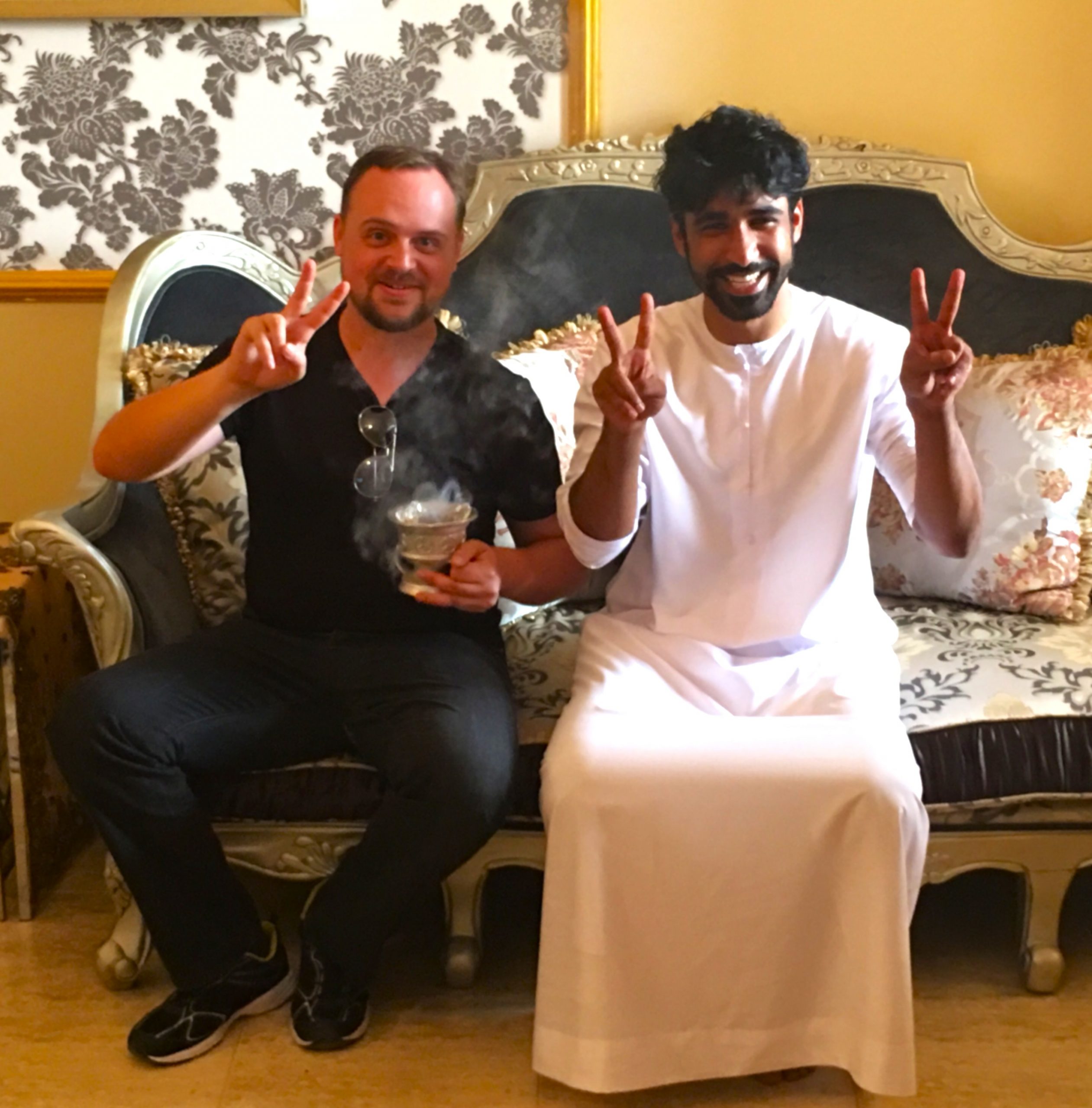
Given the geopolitical developments at this time of our lives, the UN International Day of Peace also reminded me of the photo I attached. I took this in 2016 during a stopover in the UAE on my way from Australia to Europe. Mark, my son and I were invited to spend some time with the family of one of my ex-students in my International Tourism class at Zayed University in Dubai.
In the quiet culmination of the evening, I gently asked Mark and Sultan—Aisha’s husband, lost in deep conversation—to join me for a photograph. Without hesitation, they both flashed peace signs. Their gesture was spontaneous and unscripted. It was no pose, no performance; it was a moment of pure, uncalculated expression of the shared value of peace. In that instant, I realised:
Peace is not just about global politics but about relationships. It is about the meaningful connections in our lives.
Peace, at its core, is a universal human value. It is a state of mind as much as a state of heart. Peace is a concept viewed from various perspectives, including inner and outer peace, relevant in our everyday lives and in the context of travel and tourism.
For many, travel has become a primary pursuit of happiness and well-being. It is now integral to the global wellness industry, where journeys often serve as personal projects. On one hand, travel may focus on connecting with oneself through self-care, and the act of mindfulness as per the Eastern tradition —a quest for individual empowerment and inner peace. On the other, it is pursued to connect with others: travel companions, strangers met along the way, and even those we encounter throughout life itself. This reflects the underpinnings of outer peace.
Both inner and outer peace are important for our sense of survival, well-being, and happiness. They are intimately connected.
While travel and tourism are often treated as a ‘separate bubble’ from daily life, they reflect our cultural and individual value systems. These values frequently clash—both between people and within ourselves—leading to inner and outer conflict. Such conflict arises not only from divergent worldviews but also from competition over resources, power, and control. This dynamic applies equally to tourism as an industry, which, in many ways, serves as a microcosm of society.
Two distinct dimensions of power call for our attention:
- the “Lust for Power,” which operates at the individual level as a personal drive for control, and
- the “Struggle for Power,” which manifests systemically through entrenched structures of inequality.
Amidst the daily deluge of news and social media, it is impossible to ignore both forces in action. While the struggle for power often appears purely political, it frequently originates in the individual’s insatiable lust for dominance. As psychologist Esther Perel observes, “in today’s world, intimate relationships are the new site of conflict.” Indeed, the personal lust for power within relationships mirrors the global struggle for power on the world stage.
In a world of growing disconnect and individualism, more voices are reminding us of the need to refocus on relationality. Terry Real, a renowned couple and family therapist, emphasises the importance of relational mindfulness and our willingness and capacity to foster relational empowerment. A shift from ‘me’ to ‘we’ and from ‘them’ to ‘us’ is now viewed as imperative in a culture where entitlement, shaming, blaming, discrimination and control have become an unquestioned norm for many.
The profound truth is: peace begins the moment control ends—and that place is not just within us; it is between us.
We cannot treat the individual and the system as separate silos. Conflict exists between humans at all levels, from the micro of our homes to the macro of our world. To truly invest in peace, we need a systems approach that connects the dots from the micro to the macro, highlighting the intimate relationship between inner and outer peace:
- The Micro (The Individual & The Pause). This is where personal work begins, inviting us to explore our relationship with ourselves. It is the space where we choose trust over fear, recognising that while fear fuels conflict, trust drives peace. As Victor Frankl famously noted: “In the space between stimulus and response lies our freedom to choose.”
- The Meso (The Relationship & The Community). Here, we navigate the joys and challenges of connection across both private and professional spheres. As Terry Real observes, it is our mutual understanding of our subjective experiences and needs that fosters peaceful connections. This level prompts essential questions that step beyond the individual:
- What relationships truly matter?
- What does my current relationship need?
- And what is my specific role in these relational dynamics?
- The Macro (The System & The Culture). This encompasses the broader relational ecology—the world of structures, resources, power, and control. At this level, we must acknowledge that individual peace cannot flourish within systems built on inequality, exclusion, and “power over.” We cannot simply “meditate away” the effects of patriarchy; we must address them directly.